
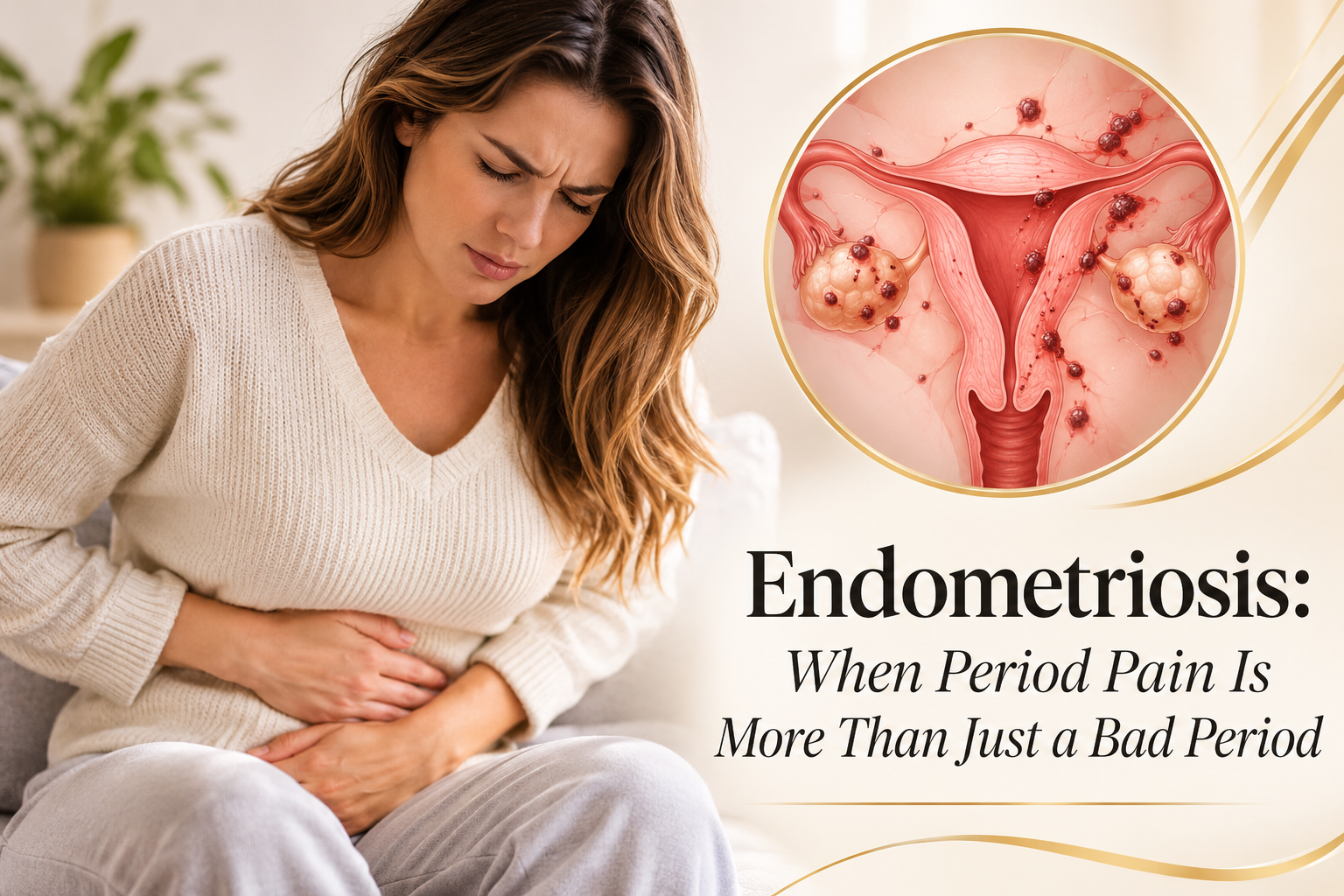
Bad periods are so normalised that many women live with endometriosis for years – sometimes over a decade – before receiving a diagnosis. Understanding the difference between ordinary period discomfort and symptoms that warrant further investigation is an important first step towards getting the right help.
What Is Endometriosis?
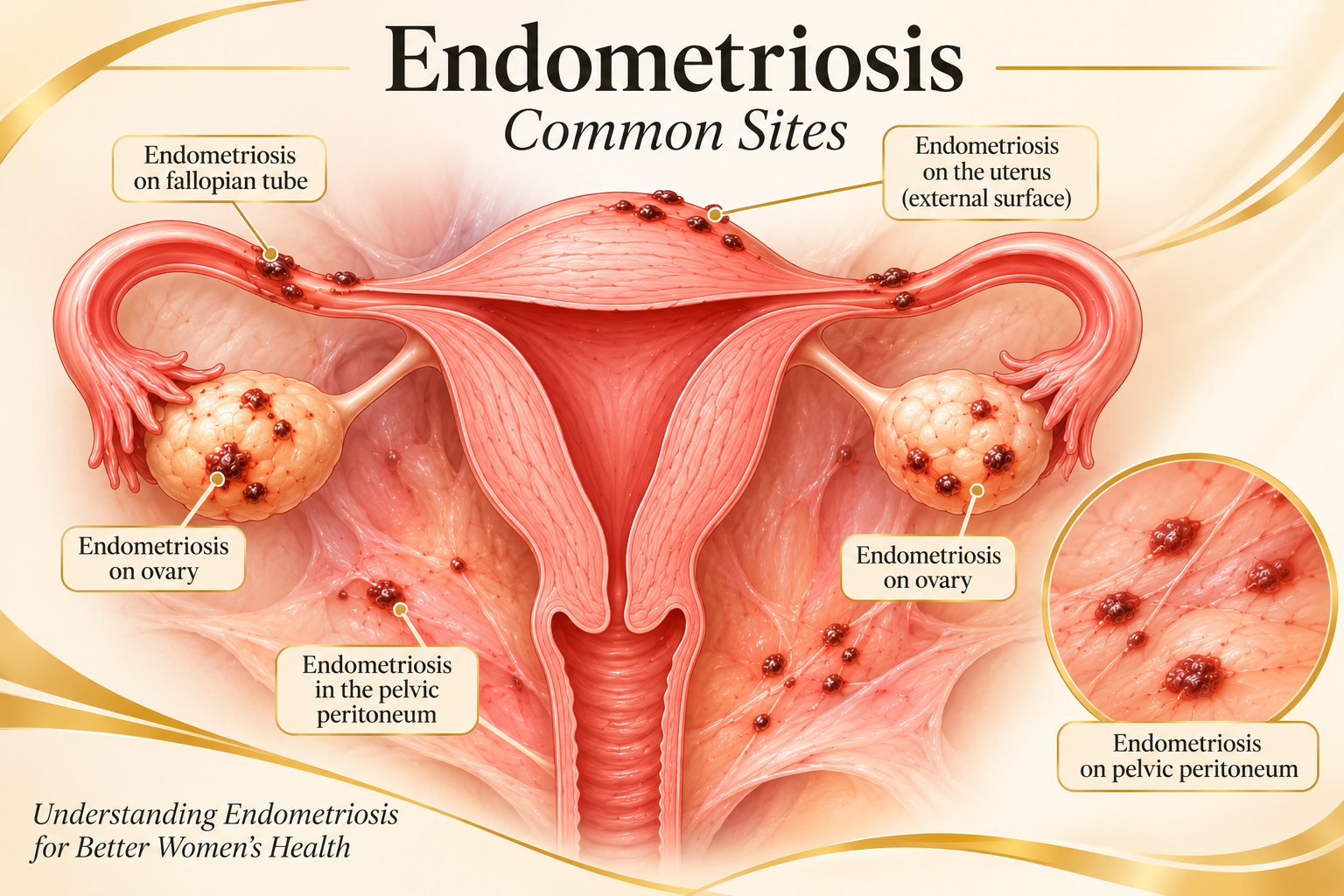
Endometriosis is a condition in which tissue similar to the lining of the womb (endometrium) grows outside the uterus. It commonly affects the ovaries, fallopian tubes and lining of the pelvis, although it can occasionally involve other organs.
Like the normal endometrium, endometriotic tissue responds to hormonal changes during the menstrual cycle. It may undergo cyclical growth and changes, and some lesions develop areas of bleeding during menstruation.
Endometriosis is relatively common, affecting approximately one in ten women of reproductive age.
However, unlike the uterine cavity, where menstrual blood can pass out through the cervix and vagina, endometriotic deposits are located within the tissues of other organs and structures. When bleeding occurs within these deposits, the accumulation of blood and tissue fluid can cause local swelling and distension. This may increase pressure within the affected area and irritate surrounding tissues and nerve endings, contributing to pain.
This helps explain the characteristic cyclical pattern of endometriosis-related pain. Symptoms may begin or intensify in the days before menstruation, become particularly severe around the onset of bleeding, and gradually improve over the following days as inflammation and tissue swelling subside.
In addition to cyclical bleeding and local tissue swelling, endometriosis can cause persistent inflammation, fibrosis and adhesions, sometimes affecting the normal anatomy and function of pelvic organs.
Endometriosis Symptoms: Beyond Normal Period Pain
Painful periods are common, but severe or persistent pain should never automatically be considered normal.
Symptoms can vary considerably, but may include:
· Severe period pain: Pain that interferes with everyday activities, work, education or social life.
· Pain before menstruation: Pain that begins several days before the period and often worsens when bleeding starts.
· Painful periods that do not respond to usual pain relief: Particularly when symptoms become progressively more difficult to manage.
· Pain during or after sexual intercourse: Known medically as dyspareunia.
· Painful bowel movements or urination: Particularly when these symptoms occur or worsen during menstruation.
· Chronic pelvic pain: Pain that continues beyond the menstrual period.
· Heavy menstrual bleeding or bleeding between periods.
· Persistent fatigue: Sometimes associated with chronic pain and inflammation.
· Lower back or leg pain: Particularly when it follows a cyclical pattern linked to menstruation.
· Difficulty conceiving: Endometriosis can sometimes affect fertility.
Not every woman experiences all these symptoms. Importantly, the severity of pain does not necessarily reflect the extent of the disease.
Even relatively limited or superficial endometriosis can cause considerable pain because of local inflammation, irritation of surrounding tissues and sensitisation of nearby nerve endings.
Extensive or deep infiltrating disease, on the other hand, can have two different effects on pain perception. Chronic inflammation and fibrosis (scar tissue formation) may involve, compress or damage pelvic nerves, contributing to persistent or neuropathic pain. However, significant nerve involvement may also impair normal nerve function and sensation, potentially masking or reducing pain perception in some women.
This helps explain why some women with extensive disease experience relatively mild symptoms, while others with minimal endometriosis suffer severe pain.
This variation is one of the reasons endometriosis can be difficult to recognise.
Why Is Endometriosis Often Missed?
One of the biggest challenges with endometriosis is the normalisation of period pain.
Many women grow up believing that severe menstrual pain is simply something they have to endure. Symptoms may also be dismissed or attributed to stress, irritable bowel syndrome (IBS), bladder problems or other conditions.
Because endometriosis can mimic several other medical conditions, diagnosis is sometimes delayed. The time between the onset of symptoms and diagnosis is frequently estimated at 7–10 years internationally.
Recognising the warning signs and seeking appropriate gynaecological assessment can help reduce unnecessary delays.
How Is Endometriosis Diagnosed?
Diagnosis begins with a detailed medical history, focusing on menstrual patterns, pain, bowel and bladder symptoms, sexual health and fertility concerns.
A pelvic examination may also be appropriate.
Investigations can include:
· Ultrasound: A transvaginal ultrasound can identify ovarian endometriosis cysts (endometriomas) and some forms of deep endometriosis. However, smaller or superficial deposits may not be visible.
· MRI: May provide additional information, particularly when deep infiltrating endometriosis or involvement of other pelvic organs is suspected.
· Laparoscopy: A minimally invasive surgical procedure that allows direct visualisation of endometriosis and, where appropriate, treatment during the same operation.
Importantly, a normal ultrasound or MRI does not exclude endometriosis. A clinical diagnosis based on symptoms, examination and imaging can be sufficient to start treatment. Surgery is not always necessary to establish the diagnosis.
Treatment and Management of Endometriosis
The underlying principle of medical treatment for endometriosis is based partly on an interesting clinical observation: symptoms often improve during pregnancy and after menopause.
During pregnancy, ovulation and menstruation are suppressed, while the hormonal environment changes significantly. After menopause, ovarian oestrogen production declines. Both situations can reduce the hormonal stimulation of endometriosis, although improvement is not guaranteed in every woman.
Medical treatment aims to reproduce some of these hormonal effects without requiring pregnancy or waiting for natural menopause.
There are two traditional hormonal approaches:
1. Medical Pseudopregnancy
This involves continuous hormonal treatment designed to suppress ovulation and menstruation, reducing the cyclical hormonal stimulation of endometriosis.
Treatment options include:
· Continuous combined hormonal contraceptive pills: Taken without the usual monthly break to suppress menstrual bleeding and reduce cyclical hormonal changes.
· Progestogen treatment: Such as dienogest or other suitable progestogens, which suppress endometriosis activity and help control pain.
· Hormonal intrauterine systems (IUS): Such as the Mirena coil, which can reduce menstrual bleeding and pelvic pain in selected women.
Treatment is generally continued over several months and may be maintained longer when effective and well tolerated.
2. Medical Pseudomenopause
This approach aims to temporarily suppress ovarian function and reduce oestrogen production, creating a reversible low-oestrogen state resembling menopause.
This can be achieved using gonadotrophin-releasing hormone (GnRH) analogues, which suppress the hormonal signals responsible for stimulating the ovaries.
These medications can be effective in controlling endometriosis-related pain but may, occasionally produce menopausal symptoms, including hot flushes, vaginal dryness and loss of bone density.
For this reason, they are generally reserved for women who have not responded adequately to first-line hormonal treatments. Add-back hormone therapy may be prescribed to reduce side effects and protect bone health.
3. Surgical Treatment
When medical treatment is unsuccessful, unsuitable or inappropriate, laparoscopic surgery may be considered to remove or treat visible endometriosis deposits and adhesions.
Surgery may be particularly appropriate in women with ovarian endometriomas, deep infiltrating disease, significant anatomical distortion or persistent symptoms despite medical treatment.
The choice between medical and surgical treatment depends on the extent of disease, severity of symptoms, previous treatment, age and, importantly, the woman's fertility plans.
An important consideration: Hormonal suppression controls endometriosis-related symptoms but does not necessarily eliminate the disease. These treatments also suppress fertility while being used and are therefore not suitable for women actively trying to conceive.
Endometriosis and Fertility
Endometriosis does not automatically mean infertility. Many women with the condition conceive naturally and have successful pregnancies.
However, in some women, endometriosis can affect fertility through inflammation, scar tissue, adhesions, ovarian involvement or changes to the normal anatomy of the reproductive organs.
The impact varies considerably between individuals and does not necessarily correspond to the severity of symptoms.
For women planning a pregnancy, fertility considerations should form an important part of the initial assessment. The choice and timing of treatment may differ depending on whether the priority is pain control, preserving fertility or achieving pregnancy.
Early specialist advice can help identify the most appropriate approach.
Frequently Asked Questions About Endometriosis
Can you have endometriosis with a normal ultrasound?
Yes. Ultrasound can identify ovarian endometriosis cysts and some forms of deep disease, but it may not detect superficial or smaller deposits. A normal ultrasound does not rule out endometriosis if symptoms are suggestive.
Does endometriosis get worse over time?
The course of endometriosis varies considerably between women. In some, the condition remains relatively stable, while in others it may progress, with symptoms becoming increasingly troublesome. Symptoms often improve during pregnancy, when ovulation and menstruation are suppressed, and after menopause, when ovarian oestrogen production declines. However, this improvement is not universal, and the disease does not necessarily disappear. Some women may continue to experience symptoms, particularly where persistent inflammation, fibrosis or adhesions are present.
Is endometriosis the same as adenomyosis?
No. Although the two conditions are related and can occur together, they are different.
Endometriosis involves tissue similar to the uterine lining growing outside the uterus. Adenomyosis occurs when similar tissue is found within the muscular wall of the uterus itself. Both can cause painful periods and pelvic discomfort, but they require individual assessment and management.
When Should You Seek a Gynaecological Assessment?
You should consider a specialist gynaecological assessment if:
· Period pain regularly interferes with your everyday life.
· Pain is severe or does not respond adequately to standard pain relief.
· Pain begins several days before your period or becomes particularly severe when bleeding starts.
· You experience pain during intercourse.
· You have cyclical bowel or bladder symptoms.
· You suffer from persistent pelvic pain.
· You are experiencing difficulty conceiving.
Severe period pain should not simply be accepted as part of being a woman.
Recognising the symptoms of endometriosis and seeking an appropriate assessment can make a significant difference to pain management, quality of life and reproductive health.
At Vividah Medical Aesthetics, we believe that women's health concerns deserve to be listened to, properly investigated and individually managed.
If you are concerned about possible endometriosis, arrange a gynaecological consultation to discuss your symptoms and the most appropriate next steps.
Book a Gynaecology Consultation
This article is intended for general educational purposes and does not replace individualised medical advice, diagnosis or treatment. Please consult a qualified healthcare professional to discuss your personal